Introduction
Decision Automation is changing the way modern businesses operate and make important decisions. It uses technology, data, and predefined rules to simplify everyday decision-making processes. Businesses can reduce manual work and improve the accuracy of their decisions. It also helps organizations respond quickly to changing situations and customer needs. As technology continues to grow, Decision Automation is becoming an important part of business success.
1. What Is Decision Automation?
Decision Automation is the process of using technology to make decisions automatically with little or no human involvement. It combines business rules, data analysis, artificial intelligence, and machine learning to handle different tasks. Instead of depending entirely on employees to review every situation, organizations can use automated systems to process information and recommend or make suitable decisions. This approach saves time, reduces effort, and makes business operations more efficient.
2. Importance of Decision Automation in Modern Businesses
Decision Automation plays an important role in helping businesses manage their daily activities. Many organizations deal with large amounts of information that require quick and accurate decisions. Handling everything manually can be difficult and time-consuming. Automated decision-making systems help businesses process information faster and maintain consistent results. They also allow employees to focus on more important responsibilities, such as planning, problem-solving, and business development.
3. How Decision Automation Works
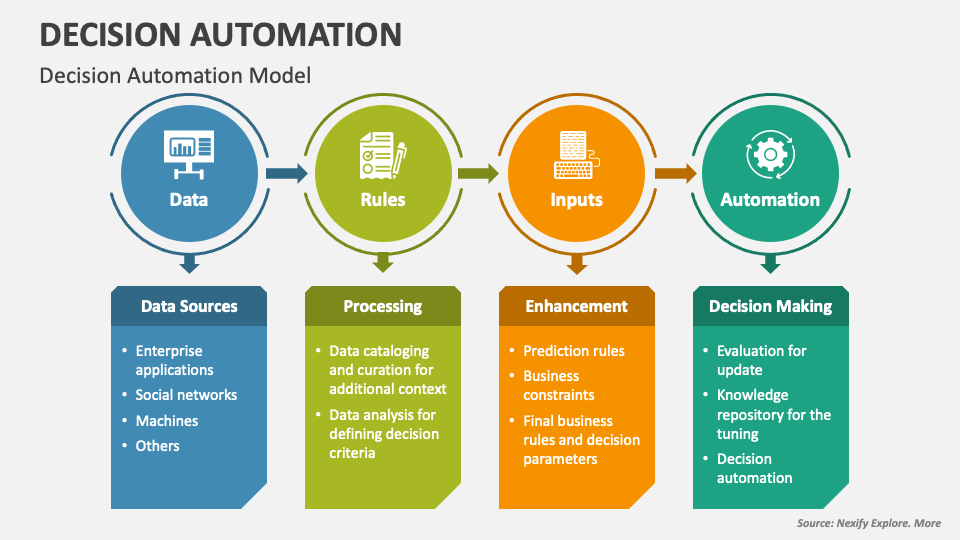
Decision Automation works by collecting information, analyzing available data, and applying predefined rules or intelligent algorithms. The system evaluates different conditions and selects an appropriate action based on the information it receives. For example, an online shopping platform may automatically approve an order, identify suspicious activity, or recommend products according to customer preferences. These processes help businesses complete routine decisions without requiring employees to review every individual case.
4. Role of Artificial Intelligence in Decision Automation
Artificial intelligence has made Decision Automation more advanced and effective. AI-powered systems can analyze large datasets, recognize patterns, and identify useful information that may be difficult to notice manually. Machine learning also allows systems to improve their performance by learning from previous data and outcomes. Businesses can use these technologies to predict customer behavior, identify potential risks, and improve operational planning. As a result, AI makes automated decision-making more flexible and intelligent.
5. Benefits of Decision Automation
One of the biggest advantages of Decision Automation is improved productivity. Automated systems can complete repetitive tasks quickly while reducing unnecessary manual work. They can also minimize human errors and support consistent decision-making across different departments. Businesses may experience lower operational costs, faster service delivery, and better resource management. These benefits make Decision Automation a valuable solution for organizations that want to improve performance and achieve long-term growth.
6. Decision Automation in Customer Service
Customer service departments can benefit greatly from Decision Automation. Businesses use automated chatbots, customer support systems, and intelligent software to respond to common customer questions. These tools can identify customer requirements and provide relevant information without long waiting times. Automated systems can also direct complicated requests to the appropriate employees. This improves the overall customer experience and allows support teams to spend more time handling complex problems.
7. Applications of Decision Automation in Different Industries
Decision Automation is useful in several industries, including healthcare, banking, retail, education, manufacturing, and insurance. Banks use automated systems to identify unusual transactions and evaluate financial risks. Healthcare organizations can use technology to organize patient information and support administrative decisions. Retail companies apply automated systems to manage inventory and understand customer preferences. These examples demonstrate how automated decision-making can improve efficiency across different business environments.
8. Challenges of Implementing Decision Automation
Although Decision Automation offers many advantages, businesses may face challenges when introducing it into their operations. Some organizations struggle with high implementation costs, outdated technology, and a lack of technical knowledge. Poor-quality data can also affect the accuracy of automated decisions. Employees may feel uncertain about new systems or worry about changes to their responsibilities. To overcome these challenges, businesses should provide proper training, use reliable data, and introduce automation through careful planning.
9. Data Security and Privacy in Decision Automation
Data security is an important consideration when using Decision Automation. Automated systems often process sensitive business information and personal customer details. Without proper protection, this information may become exposed to unauthorized access or misuse. Organizations should use strong security measures, access controls, encryption, and regular system monitoring. They should also follow applicable privacy regulations to protect customer information. Maintaining data security helps businesses build trust and use automation responsibly.
10. Human Involvement in Decision Automation
Even though automated systems can handle many decisions independently, human involvement remains important. Technology may process information quickly, but some situations require human judgment, creativity, and emotional understanding. Employees should monitor automated processes and review important decisions when necessary. Human supervision is especially valuable when dealing with sensitive information, unusual situations, or high-impact outcomes. Combining human knowledge with automated technology can create a more balanced and reliable decision-making process.
11. Future of Decision Automation
The future of Decision Automation looks promising as artificial intelligence, machine learning, and data analytics continue to improve. Businesses are expected to adopt more intelligent systems that can handle complex tasks and provide useful recommendations. Advanced automation may help organizations understand market changes, manage risks, and improve customer experiences. However, companies will also need to focus on transparency, accountability, and responsible technology use. These developments will make Decision Automation an increasingly important part of digital transformation.
12. Best Practices for Successful Decision Automation
Businesses should follow effective practices to achieve better results from Decision Automation. First, they should identify repetitive processes that can benefit from automation. Next, they should select suitable technology and ensure that their data is accurate and secure. Regular system testing and performance monitoring are also necessary to identify problems early. Employees should receive proper training so they understand how automated systems work. With a clear strategy and continuous improvement, organizations can use Decision Automation successfully.
Conclusion
Decision Automation is an effective way to improve business decision-making and operational performance. It helps organizations reduce repetitive tasks, save time, and achieve more consistent results. Artificial intelligence and machine learning are making automated systems smarter and more useful. However, businesses must consider data privacy, security, and human supervision during implementation. By adopting the right approach, organizations can use Decision Automation to support innovation and future growth.
Frequently Asked Questions (FAQs)
1. What is Decision Automation in simple words?
Decision Automation means using technology and software to make decisions automatically based on data, business rules, and predefined conditions. It reduces the need for manual decision-making in repetitive processes.
2. What are the main benefits of Decision Automation?
The main benefits include faster decision-making, improved accuracy, reduced operational costs, increased productivity, fewer manual errors, and better business efficiency.
3. How does artificial intelligence support Decision Automation?
Artificial intelligence helps automated systems analyze information, recognize patterns, learn from previous data, and make intelligent decisions. It allows businesses to manage complex processes more effectively.