
Introduction
Machine learning has become one of the most important technologies driving innovation across industries. From personalized recommendations and fraud detection to predictive analytics and autonomous systems, machine learning enables organizations to make smarter decisions using data. At the heart of every machine learning solution lies an algorithm—a mathematical model that learns patterns from data and uses those patterns to make predictions or decisions.
For aspiring and experienced data scientists alike, understanding machine learning algorithms is essential. While hundreds of algorithms exist, a core group forms the foundation of most real-world machine learning applications. Mastering these algorithms helps data scientists choose the right model for a given problem, improve prediction accuracy, and build scalable AI solutions.
This comprehensive guide explores the most important machine learning algorithms every data scientist should know. We will discuss how each algorithm works, its advantages, disadvantages, and common real-world applications. Whether you’re just starting your data science journey or looking to strengthen your machine learning knowledge, this article will provide a solid foundation.
What Are Machine Learning Algorithms?
Machine learning algorithms are mathematical and statistical techniques that enable computers to learn patterns from data without explicit programming.
Instead of following fixed instructions, machine learning models analyze data, identify relationships, and improve their performance through experience.
Machine learning algorithms generally fall into three categories:
Supervised Learning
Uses labeled data to predict outcomes.
Examples:
- House price prediction
- Email spam detection
- Customer churn prediction
Unsupervised Learning
Finds hidden patterns in unlabeled data.
Examples:
- Customer segmentation
- Market basket analysis
- Anomaly detection
Reinforcement Learning
Learns through rewards and penalties.
Examples:
- Robotics
- Autonomous vehicles
- Game-playing AI
Understanding these categories helps data scientists select appropriate algorithms for different business problems.
Why Data Scientists Must Understand Machine Learning Algorithms
Machine learning projects often fail because teams choose inappropriate models or misunderstand algorithm behavior.
Knowledge of machine learning algorithms enables data scientists to:
- Select suitable models
- Improve prediction accuracy
- Reduce overfitting
- Interpret results effectively
- Optimize performance
- Solve complex business problems
A strong understanding of algorithms is one of the most valuable skills in data science.
1. Linear Regression
Linear Regression is one of the simplest and most widely used machine learning algorithms.
It predicts a continuous numerical value by identifying the relationship between input variables and an output variable.
For example:
- Predicting house prices
- Forecasting sales revenue
- Estimating stock values
The algorithm attempts to fit the best straight line through data points.
How It Works
Linear Regression finds a mathematical relationship between variables and predicts outcomes based on that relationship.
Advantages
- Easy to understand
- Fast training time
- Highly interpretable
- Effective for simple relationships
Disadvantages
- Assumes linear relationships
- Sensitive to outliers
- Limited performance on complex datasets
Real-World Applications
- Sales forecasting
- Financial analysis
- Demand prediction
- Risk assessment
2. Logistic Regression
Despite its name, Logistic Regression is primarily used for classification problems rather than regression tasks.
It predicts the probability that a data point belongs to a specific category.
Examples include:
- Spam detection
- Disease diagnosis
- Customer churn prediction
- Loan approval decisions
How It Works
The algorithm uses a logistic function to estimate probabilities between 0 and 1.
Advantages
- Easy implementation
- Interpretable results
- Fast computation
- Effective for binary classification
Disadvantages
- Limited ability to model complex relationships
- Less effective with highly nonlinear data
Real-World Applications
- Fraud detection
- Medical diagnosis
- Email filtering
- Marketing analytics
3. Decision Tree
Decision Trees are among the most intuitive machine learning algorithms.
They make decisions by splitting data into branches based on feature values.
The structure resembles a flowchart:
- Root node
- Decision branches
- Leaf nodes
How It Works
The algorithm repeatedly divides data into subsets until predictions can be made accurately.
Advantages
- Easy visualization
- Handles both numerical and categorical data
- Requires minimal preprocessing
- Highly interpretable
Disadvantages
- Prone to overfitting
- Can become unstable with small data changes
Real-World Applications
- Credit scoring
- Medical diagnosis
- Customer segmentation
- Business decision-making
4. Random Forest
Random Forest is an ensemble learning algorithm that combines multiple decision trees to improve prediction accuracy.
Rather than relying on a single tree, it aggregates predictions from many trees.
How It Works
Each tree is trained on a random subset of data.
The final prediction is determined through:
- Majority voting (classification)
- Averaging (regression)
Advantages
- High accuracy
- Reduces overfitting
- Handles missing values well
- Works with large datasets
Disadvantages
- Less interpretable than decision trees
- Higher computational requirements
Real-World Applications
- Fraud detection
- Customer behavior prediction
- Healthcare analytics
- Financial forecasting
5. Support Vector Machine (SVM)
Support Vector Machine is a powerful supervised learning algorithm used for classification and regression tasks.
It works by identifying the optimal boundary that separates data points into categories.
How It Works
SVM finds a hyperplane that maximizes the distance between different classes.
Advantages
- Effective with high-dimensional data
- Strong classification performance
- Works well with smaller datasets
Disadvantages
- Computationally intensive
- Difficult to interpret
- Slower on large datasets
Real-World Applications
- Face recognition
- Text classification
- Bioinformatics
- Image analysis
6. K-Nearest Neighbors (KNN)
K-Nearest Neighbors is a simple yet effective algorithm used for classification and regression.
It predicts outcomes based on the similarity of nearby data points.
How It Works
The algorithm identifies the K closest neighbors and uses their values to make predictions.
Advantages
- Easy implementation
- No training phase
- Effective for smaller datasets
Disadvantages
- Slow with large datasets
- Sensitive to irrelevant features
- Requires feature scaling
Real-World Applications
- Recommendation systems
- Image classification
- Pattern recognition
- Customer segmentation
7. Naive Bayes
Naive Bayes is a probabilistic machine learning algorithm based on Bayes’ Theorem.
It assumes all features are independent, which simplifies calculations.
How It Works
The algorithm calculates the probability of different outcomes and selects the most likely category.
Advantages
- Fast and efficient
- Performs well with text data
- Requires minimal training data
Disadvantages
- Independence assumption is often unrealistic
- May struggle with complex datasets
Real-World Applications
- Spam filtering
- Sentiment analysis
- Document classification
- Recommendation engines
8. Gradient Boosting
Gradient Boosting is an advanced ensemble learning technique that builds models sequentially.
Each new model corrects the errors of previous models.
Popular implementations include:
- XGBoost
- LightGBM
- CatBoost
How It Works
The algorithm combines weak learners to create a powerful predictive model.
Advantages
- Exceptional accuracy
- Handles complex relationships
- Performs well in competitions
Disadvantages
- Computationally intensive
- Requires parameter tuning
- Risk of overfitting
Real-World Applications
- Customer churn prediction
- Fraud detection
- Search ranking
- Financial forecasting
9. XGBoost
XGBoost (Extreme Gradient Boosting) is one of the most popular machine learning algorithms among data scientists.
It has won numerous machine learning competitions due to its performance and efficiency.
Key Features
- Parallel processing
- Regularization
- Missing value handling
- High scalability
Advantages
- Excellent predictive power
- Fast training
- Handles large datasets effectively
Disadvantages
- Complex parameter tuning
- Less interpretable
Real-World Applications
- Risk modeling
- Recommendation systems
- Healthcare analytics
- Business forecasting
10. K-Means Clustering
K-Means is a widely used unsupervised learning algorithm.
It groups similar data points into clusters.
How It Works
The algorithm:
- Selects K cluster centers.
- Assigns data points to the nearest center.
- Updates cluster centers.
- Repeats until convergence.
Advantages
- Easy implementation
- Fast processing
- Scalable to large datasets
Disadvantages
- Requires selecting K beforehand
- Sensitive to outliers
- Assumes spherical clusters
Real-World Applications
- Customer segmentation
- Market research
- Image compression
- Social network analysis
11. Principal Component Analysis (PCA)
PCA is a dimensionality reduction technique frequently used in machine learning workflows.
It reduces the number of variables while preserving important information.
How It Works
PCA transforms data into a smaller set of principal components.
Advantages
- Reduces complexity
- Improves training speed
- Helps visualization
Disadvantages
- Reduced interpretability
- Potential information loss
Real-World Applications
- Image processing
- Data visualization
- Feature engineering
- Bioinformatics
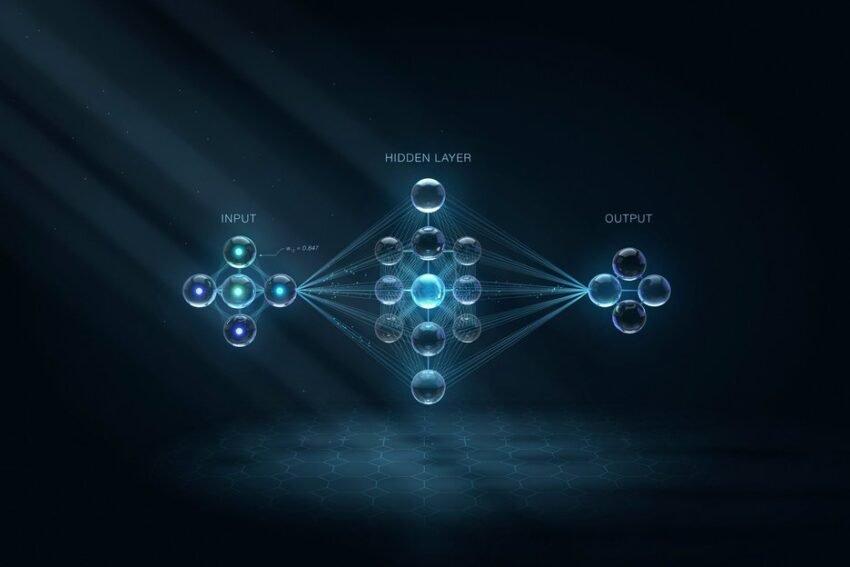
12. Neural Networks
Neural Networks are inspired by the structure of the human brain.
They consist of interconnected layers of artificial neurons.
Components
- Input layer
- Hidden layers
- Output layer
How It Works
Neural networks learn by adjusting weights through repeated training.
Advantages
- Learns complex patterns
- Highly flexible
- Supports large-scale applications
Disadvantages
- Requires large datasets
- High computational costs
- Difficult to interpret
Real-World Applications
- Speech recognition
- Image classification
- Natural language processing
- Predictive analytics
13. Deep Learning Algorithms
Deep Learning is a specialized branch of machine learning that uses neural networks with multiple hidden layers.
Deep learning has driven major breakthroughs in AI.
Common Architectures
Convolutional Neural Networks (CNNs)
Used for:
- Image recognition
- Object detection
- Medical imaging
Recurrent Neural Networks (RNNs)
Used for:
- Language modeling
- Time-series forecasting
- Speech recognition
Transformers
Used for:
- Chatbots
- Translation
- Generative AI
- Large language models
Advantages
- State-of-the-art performance
- Learns highly complex relationships
- Handles unstructured data
Disadvantages
- Expensive training
- Large data requirements
- Limited interpretability
Comparing Popular Machine Learning Algorithms
| Algorithm | Type | Best For | Interpretability |
|---|---|---|---|
| Linear Regression | Supervised | Numerical prediction | High |
| Logistic Regression | Supervised | Classification | High |
| Decision Tree | Supervised | Rule-based decisions | High |
| Random Forest | Supervised | General prediction | Medium |
| SVM | Supervised | Complex classification | Medium |
| KNN | Supervised | Similarity-based prediction | Medium |
| Naive Bayes | Supervised | Text classification | High |
| XGBoost | Supervised | High-performance prediction | Low |
| K-Means | Unsupervised | Clustering | Medium |
| PCA | Unsupervised | Dimensionality reduction | Low |
| Neural Networks | Supervised | Complex pattern recognition | Low |
| Deep Learning | Supervised | Large-scale AI systems | Low |
How to Choose the Right Machine Learning Algorithm
Selecting the right algorithm depends on several factors:
Understand the Problem Type
Ask whether the task involves:
- Classification
- Regression
- Clustering
- Recommendation
- Forecasting
Evaluate Dataset Size
Some algorithms perform better with:
- Small datasets (SVM, KNN)
- Large datasets (Random Forest, XGBoost, Neural Networks)
Consider Interpretability
Industries such as healthcare and finance often require explainable models.
Assess Computational Resources
Deep learning models demand significantly more computing power than traditional algorithms.
Experiment and Compare
Testing multiple algorithms often produces the best results.
Future of Machine Learning Algorithms
Machine learning continues to evolve rapidly.
Emerging trends include:
- Automated Machine Learning (AutoML)
- Explainable AI (XAI)
- Federated Learning
- Generative AI
- Reinforcement Learning at scale
- Foundation Models
- Hybrid AI Systems
Future algorithms will become more accurate, efficient, and accessible, enabling organizations to solve increasingly complex challenges.
Conclusion
Machine learning algorithms form the foundation of modern data science and artificial intelligence. From simple models like Linear Regression and Logistic Regression to advanced techniques such as XGBoost, Neural Networks, and Deep Learning, each algorithm serves a unique purpose and offers specific strengths.
For data scientists, understanding these algorithms is essential for building effective predictive models, solving business problems, and creating data-driven solutions. While no single algorithm is best for every scenario, mastering the fundamentals of the most widely used machine learning algorithms provides the knowledge needed to select the right approach for any project.
As machine learning continues to transform industries worldwide, data scientists who develop expertise in these core algorithms will remain at the forefront of innovation, helping organizations unlock the full value of their data and drive smarter decision-making.