
Introduction
Artificial Intelligence (AI) has become a foundational technology for modern businesses, transforming how organizations operate, compete, and grow. In 2026, AI is no longer limited to experimental use cases—it is embedded in core business functions such as marketing, finance, customer service, human resources, supply chain management, and product development.
Companies of all sizes are adopting AI software solutions to automate workflows, analyze data, improve decision-making, and enhance customer experiences. What makes AI especially powerful is its ability to learn from data, adapt over time, and deliver insights that were previously impossible or too slow to generate manually.
This guide explores the essential AI software solutions for modern businesses, explaining the most important categories, real-world applications, benefits, and how organizations can choose the right tools to stay competitive.
What Are AI Software Solutions?
AI software solutions are tools and platforms that use artificial intelligence technologies—such as machine learning, natural language processing, and computer vision—to perform tasks that typically require human intelligence.
These solutions can:
- Automate repetitive tasks
- Analyze large datasets
- Generate content and insights
- Support decision-making
- Improve customer interactions
- Optimize business operations
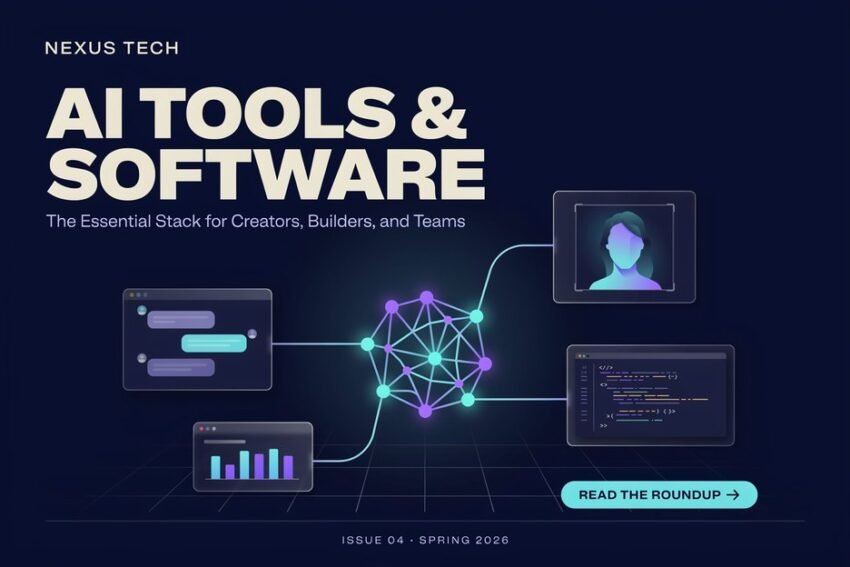
In modern enterprises, AI software is not a single tool but an ecosystem of interconnected systems working together.
Why AI Software Is Essential for Modern Businesses
Businesses are adopting AI solutions because they solve critical operational challenges:
1. Data Overload
Companies generate massive volumes of data that are impossible to analyze manually.
2. Speed Requirements
Modern markets require real-time decision-making.
3. Cost Pressures
Organizations need to reduce operational costs while maintaining efficiency.
4. Customer Expectations
Customers expect personalized, fast, and seamless experiences.
5. Competition
Businesses that adopt AI gain a strong competitive advantage.
1. AI-Powered Customer Relationship Management (CRM)
Customer relationship management is one of the most important areas where AI is transforming business operations.
Leading Example: Salesforce
Salesforce integrates AI through its Einstein platform.
Key Features
- Predictive lead scoring
- Customer behavior analysis
- Automated email responses
- Sales forecasting
- Personalized recommendations
Business Impact
- Higher conversion rates
- Improved customer retention
- Faster sales cycles
AI-powered CRM systems help businesses understand customers more deeply and respond proactively.
2. AI for Marketing Automation
AI marketing tools help businesses create, manage, and optimize campaigns at scale.
Leading Platforms: HubSpot and Adobe
Key Features
- Email automation
- Content generation
- Customer segmentation
- Campaign optimization
- Ad targeting
Business Impact
- Increased ROI on marketing spend
- Better audience targeting
- Faster content production
AI enables hyper-personalized marketing strategies that improve engagement and conversions.
3. AI for Business Intelligence and Analytics
Business intelligence tools powered by AI help organizations turn raw data into actionable insights.
Leading Tools: Microsoft (Power BI) and Tableau
Key Features
- Interactive dashboards
- Predictive analytics
- Natural language queries
- Data visualization
- Trend forecasting
Business Impact
- Faster decision-making
- Improved strategic planning
- Better financial forecasting
AI-powered analytics eliminate guesswork in business decisions.
4. AI for Customer Support and Chatbots
AI chatbots are now a standard part of customer service operations.
Leading Solutions: Zendesk and Intercom
Key Features
- 24/7 automated support
- Natural language understanding
- Ticket routing
- Sentiment analysis
- Self-service automation
Business Impact
- Reduced support costs
- Faster response times
- Improved customer satisfaction
AI chatbots handle repetitive queries while human agents focus on complex issues.
5. AI for Human Resources (HR) Management
AI is transforming recruitment, onboarding, and employee management.
Leading Platforms: Workday and LinkedIn
Key Features
- Resume screening
- Candidate matching
- Employee performance analysis
- Workforce planning
- Talent acquisition insights
Business Impact
- Faster hiring processes
- Better talent selection
- Reduced HR workload
AI helps organizations build stronger and more efficient teams.
6. AI for Finance and Accounting
Financial operations benefit significantly from AI automation and predictive modeling.
Leading Tools: Intuit (QuickBooks) and enterprise AI finance systems
Key Features
- Automated bookkeeping
- Fraud detection
- Financial forecasting
- Expense tracking
- Invoice automation
Business Impact
- Improved financial accuracy
- Reduced manual errors
- Better cash flow management
AI enables smarter financial planning and risk management.
7. AI for Supply Chain and Operations
Supply chain optimization is a critical area where AI delivers major efficiency gains.
Leading Solutions: SAP and Oracle
Key Features
- Demand forecasting
- Inventory optimization
- Logistics planning
- Route optimization
- Risk prediction
Business Impact
- Reduced operational costs
- Improved delivery times
- Better inventory control
AI helps businesses build resilient and efficient supply chains.
8. AI for Cybersecurity
Cybersecurity threats are increasing, and AI plays a vital role in defense systems.
Leading Tools: CrowdStrike and Palo Alto Networks
Key Features
- Threat detection
- Malware analysis
- Anomaly detection
- Automated response systems
- Security monitoring
Business Impact
- Faster threat response
- Reduced security risks
- Improved data protection
AI strengthens enterprise security against evolving cyber threats.
9. AI for Software Development
AI is revolutionizing how software is built and maintained.
Leading Tools: GitHub and JetBrains
Key Features
- Code generation
- Bug detection
- Automated testing
- Code completion
- Documentation generation
Business Impact
- Faster development cycles
- Higher code quality
- Reduced engineering costs
AI helps developers focus on innovation rather than repetitive coding tasks.
10. AI for Project and Workflow Management
AI-powered tools streamline project coordination and team collaboration.
Leading Tools: Asana and Monday.com
Key Features
- Task automation
- Smart scheduling
- Workflow optimization
- Progress tracking
- Predictive deadlines
Business Impact
- Improved team productivity
- Better project visibility
- Reduced delays
AI ensures smoother project execution across teams.
Benefits of AI Software for Businesses
Across all categories, AI software delivers key advantages:
1. Automation
Reduces manual workload and improves efficiency.
2. Better Decision-Making
Provides real-time insights and predictions.
3. Cost Savings
Reduces operational and labor costs.
4. Scalability
Supports business growth without proportional resource increases.
5. Competitive Advantage
Enables faster innovation and market responsiveness.
Challenges of AI Software Adoption
Despite its benefits, businesses face several challenges:
- Data privacy concerns
- High implementation costs
- Integration complexity
- Skill shortages
- Algorithm bias
- Regulatory compliance issues
Proper planning and governance are essential for success.
Future of AI Software in Business
AI software is expected to evolve significantly in the coming years:
Autonomous Business Systems
AI will manage entire workflows with minimal human input.
Hyper-Personalization
Customer experiences will become fully individualized.
AI Integration Everywhere
Every major business software will include AI capabilities.
Real-Time Decision Engines
Businesses will make instant decisions based on live data.
Conclusion
AI software solutions have become essential for modern businesses aiming to stay competitive in a fast-changing digital environment. From CRM and marketing automation to cybersecurity, finance, HR, and supply chain management, AI is transforming every core business function.
Companies like Microsoft, Salesforce, SAP, and OpenAI are leading this transformation by embedding intelligence into everyday business tools.
As AI continues to advance, businesses that adopt these solutions early will gain stronger efficiency, deeper insights, and a lasting competitive advantage in the global market.