
Introduction
Machine Learning (ML) has become one of the most transformative technologies of the modern era. From personalized recommendations on streaming platforms to fraud detection in banking and self-driving cars, machine learning is changing the way businesses operate and how people interact with technology. Although the term may sound complex, the fundamental concept behind machine learning is relatively simple: enabling computers to learn from data and improve their performance without being explicitly programmed for every task.
As organizations continue to generate massive amounts of data, machine learning provides the tools needed to analyze information, identify patterns, and make intelligent decisions. According to industry experts, machine learning is a key component of artificial intelligence (AI) and is expected to play an even bigger role in shaping industries such as healthcare, finance, retail, manufacturing, and education.
This beginner’s guide explores what machine learning is, how it works, the different types of machine learning, its benefits, challenges, and real-world applications. Whether you are a student, business professional, or technology enthusiast, this article will help you understand the basics of machine learning and why it matters in today’s digital world.
What Is Machine Learning?
Machine learning is a branch of artificial intelligence that enables computers to learn from data and improve their accuracy over time without being manually programmed for every scenario.
Traditional computer programs follow specific instructions written by developers. In contrast, machine learning systems analyze data, identify patterns, and make predictions or decisions based on what they learn.
For example, instead of programming a computer to recognize every possible image of a cat, a machine learning model is trained using thousands of cat images. Over time, it learns the characteristics that distinguish cats from other objects and becomes capable of recognizing new images accurately.
In simple terms:
Machine Learning = Data + Algorithms + Learning
The more quality data a model receives, the better it can learn and improve its predictions.
How Does Machine Learning Work?
Machine learning follows a structured process that allows computers to learn from data efficiently.
1. Data Collection
The first step is gathering relevant data. This data can come from various sources, including:
- Websites
- Mobile applications
- Sensors
- Social media platforms
- Customer databases
- Business records
The quality of the data significantly impacts the performance of the machine learning model.
2. Data Preparation
Raw data often contains errors, duplicates, or missing values. Data preparation involves:
- Cleaning the data
- Removing inconsistencies
- Formatting information
- Selecting useful features
Clean data helps improve model accuracy.
3. Choosing an Algorithm
An algorithm is a set of mathematical instructions that helps the model learn patterns from data.
Popular machine learning algorithms include:
- Linear Regression
- Decision Trees
- Random Forest
- K-Nearest Neighbors (KNN)
- Support Vector Machines (SVM)
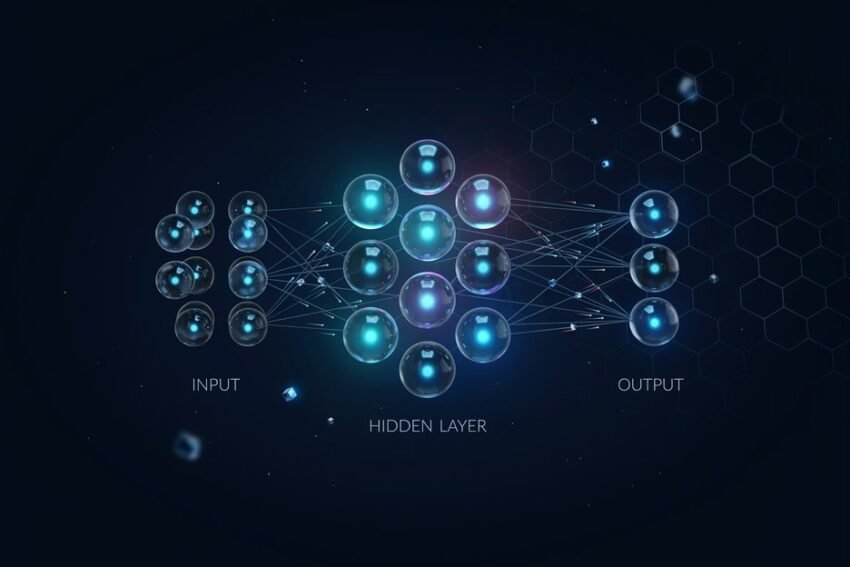
- Neural Networks
Each algorithm is designed for specific types of problems.
4. Training the Model
The algorithm is trained using historical data.
During training, the model:
- Examines patterns
- Identifies relationships
- Adjusts internal parameters
- Learns from mistakes
The goal is to create a model capable of making accurate predictions.
5. Testing and Evaluation
After training, the model is tested using new data it has never seen before.
Evaluation metrics may include:
- Accuracy
- Precision
- Recall
- F1 Score
- Mean Squared Error
These metrics help determine the model’s effectiveness.
6. Deployment and Improvement
Once the model performs well, it can be deployed in real-world environments.
Organizations continuously monitor and retrain models to maintain accuracy as new data becomes available.
Types of Machine Learning
Machine learning can be divided into three primary categories.
1. Supervised Learning
Supervised learning uses labeled data where the correct answers are already known.
The model learns by comparing its predictions with actual outcomes.
Examples:
- Email spam detection
- House price prediction
- Weather forecasting
- Customer churn prediction
Advantages:
- High accuracy
- Easy performance measurement
- Suitable for many business applications
Challenges:
- Requires large amounts of labeled data
- Data labeling can be time-consuming
2. Unsupervised Learning
Unsupervised learning works with unlabeled data.
The system identifies hidden patterns and relationships without predefined answers.
Examples:
- Customer segmentation
- Market basket analysis
- Recommendation systems
- Fraud detection
Advantages:
- No need for labeled data
- Useful for discovering unknown patterns
Challenges:
- Results may be difficult to interpret
- Accuracy can be harder to evaluate
3. Reinforcement Learning
Reinforcement learning allows machines to learn through trial and error.
The system receives rewards for good actions and penalties for poor decisions.
Over time, it learns strategies that maximize rewards.
Examples:
- Robotics
- Self-driving vehicles
- Video game AI
- Automated trading systems
Advantages:
- Learns complex behaviors
- Adapts to changing environments
Challenges:
- Requires extensive training
- Computationally expensive
Why Is Machine Learning Important?
Machine learning is important because it enables organizations to extract valuable insights from large datasets and automate decision-making processes.
Key benefits include:
Improved Accuracy
Machine learning models can identify patterns that humans may overlook, leading to more accurate predictions.
Automation
Many repetitive tasks can be automated, reducing manual effort and increasing productivity.
Better Customer Experiences
Businesses can provide personalized recommendations and services based on user behavior.
Faster Decision-Making
Machine learning processes vast amounts of data quickly, enabling real-time decisions.
Cost Reduction
Automation and predictive analytics help reduce operational costs.
Real-World Applications of Machine Learning
Machine learning is already integrated into many aspects of daily life.
Let’s explore some of its most significant applications.
1. Healthcare
Healthcare is one of the industries benefiting most from machine learning.
Medical Diagnosis
Machine learning models can analyze medical images and detect diseases such as:
- Cancer
- Pneumonia
- Heart disease
- Diabetic retinopathy
Drug Discovery
Researchers use machine learning to accelerate drug development by identifying promising compounds faster.
Predictive Healthcare
Hospitals use predictive models to:
- Forecast patient outcomes
- Reduce readmissions
- Improve treatment plans
Benefits
- Faster diagnosis
- Improved patient care
- Reduced healthcare costs
2. Finance
Financial institutions rely heavily on machine learning.
Fraud Detection
Banks analyze transaction patterns to identify suspicious activities in real time.
Credit Scoring
Machine learning evaluates customer risk profiles and helps determine loan eligibility.
Algorithmic Trading
Investment firms use machine learning models to analyze market trends and execute trades automatically.
Benefits
- Enhanced security
- Better risk management
- Faster financial decisions
3. E-Commerce and Retail
Online retailers use machine learning to improve customer experiences and increase sales.
Product Recommendations
Recommendation engines suggest products based on:
- Purchase history
- Browsing behavior
- User preferences
Inventory Management
Machine learning predicts demand and helps businesses optimize stock levels.
Dynamic Pricing
Retailers adjust prices based on market conditions and consumer demand.
Benefits
- Increased revenue
- Improved customer satisfaction
- Better inventory control
4. Transportation
Machine learning is revolutionizing transportation systems worldwide.
Self-Driving Cars
Autonomous vehicles use machine learning to:
- Detect objects
- Recognize traffic signs
- Navigate roads
- Avoid collisions
Traffic Prediction
Navigation apps analyze traffic patterns and recommend optimal routes.
Fleet Management
Logistics companies optimize delivery schedules using predictive analytics.
Benefits
- Reduced accidents
- Improved efficiency
- Lower transportation costs
5. Education
Educational institutions are increasingly adopting machine learning solutions.
Personalized Learning
Learning platforms adapt educational content to each student’s needs and performance.
Student Performance Analysis
Schools can identify students who may need additional support.
Automated Grading
Machine learning assists teachers by evaluating assignments and assessments.
Benefits
- Customized learning experiences
- Better educational outcomes
- Increased efficiency
6. Manufacturing
Smart factories use machine learning to optimize production processes.
Predictive Maintenance
Machine learning predicts equipment failures before they occur.
Quality Control
Computer vision systems identify defects during manufacturing.
Supply Chain Optimization
Manufacturers forecast demand and manage resources more effectively.
Benefits
- Reduced downtime
- Improved product quality
- Lower operational costs
7. Cybersecurity
Cyber threats continue to grow in sophistication.
Machine learning helps organizations defend against attacks.
Threat Detection
Security systems identify unusual activities that may indicate cyberattacks.
Malware Analysis
Machine learning models can recognize malicious software based on behavioral patterns.
User Authentication
Advanced authentication systems detect suspicious login attempts.
Benefits
- Faster threat detection
- Enhanced security
- Reduced risk of breaches
8. Entertainment and Media
Entertainment platforms use machine learning extensively.
Content Recommendations
Streaming services recommend movies, music, and shows based on viewing habits.
Audience Analysis
Media companies understand audience preferences and engagement patterns.
Content Creation
Machine learning assists in video editing, image enhancement, and content generation.
Benefits
- Personalized experiences
- Increased user engagement
- Better content discovery
Machine Learning vs Artificial Intelligence
Many people use machine learning and artificial intelligence interchangeably, but they are not the same.
| Artificial Intelligence | Machine Learning |
|---|---|
| Broader concept of creating intelligent machines | Subset of AI |
| Focuses on human-like intelligence | Focuses on learning from data |
| Includes reasoning and decision-making | Uses algorithms and statistical models |
| May not require learning | Always involves learning from data |
In simple terms, machine learning is one of the technologies that makes artificial intelligence possible.
Challenges of Machine Learning
Despite its advantages, machine learning faces several challenges.
Data Quality Issues
Poor-quality data can lead to inaccurate predictions.
Privacy Concerns
Organizations must protect sensitive information and comply with data regulations.
Bias and Fairness
Biased training data can produce unfair outcomes.
High Computational Costs
Training advanced machine learning models often requires significant computing resources.
Lack of Transparency
Some complex models, particularly deep learning systems, can be difficult to interpret.
Addressing these challenges is essential for responsible AI development.
The Future of Machine Learning
The future of machine learning looks incredibly promising.
Several emerging trends are shaping the next generation of intelligent systems.
Explainable AI
Researchers are developing models that provide transparent explanations for their decisions.
Edge Machine Learning
Machine learning is moving closer to devices such as smartphones, cameras, and sensors, reducing reliance on cloud computing.
Automated Machine Learning (AutoML)
AutoML simplifies model development, making machine learning accessible to non-experts.
Generative AI
Generative AI systems can create:
- Text
- Images
- Videos
- Audio
- Software code
These capabilities are transforming content creation and business operations.
Human-AI Collaboration
Future systems will increasingly assist humans rather than replace them, enhancing productivity and innovation.
How Beginners Can Start Learning Machine Learning
If you are new to machine learning, consider the following learning path:
Learn Basic Mathematics
Focus on:
- Statistics
- Probability
- Linear Algebra
Learn Programming
Python is the most popular language for machine learning.
Important libraries include:
- NumPy
- Pandas
- Scikit-learn
- TensorFlow
- PyTorch
Practice with Projects
Build simple projects such as:
- Spam classifiers
- House price predictors
- Sentiment analysis tools
- Recommendation systems
Study Real Datasets
Explore public datasets to gain hands-on experience.
Continue Learning
Machine learning evolves rapidly, making continuous learning essential.
Conclusion
Machine learning has become a cornerstone of modern technology, enabling computers to learn from data, recognize patterns, and make intelligent decisions. From healthcare and finance to transportation, education, manufacturing, and cybersecurity, machine learning is transforming industries and improving everyday experiences.
As businesses increasingly rely on data-driven strategies, the demand for machine learning skills continues to grow. Understanding the fundamentals of machine learning is no longer limited to data scientists and engineers; it is becoming a valuable skill for professionals across many fields.
For beginners, the journey into machine learning may seem challenging at first, but with the right learning approach, it can be both rewarding and exciting. By understanding how machine learning works and exploring its real-world applications, you can gain valuable insights into one of the most influential technologies shaping the future of our digital world.